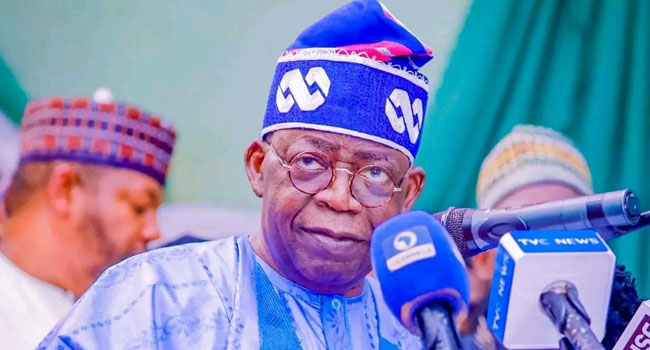
The continuing easing of the biting inflationary spirals in the prices of essential needs caused by the removal of fuel subsidy by the President Bola Tinubu administration. The noticeable increase in food productivity despite persisting insecurity constraints. The sustained positive outlook in the country’s surplus trade balances across successive quarters. The maintenance of a stable exchange rate with the Naira even gradually strengthening through the deft monetary policy. The renewed investor interest and confidence in the country’s economic potentials as reflected in the resurgence of the Nigerian stock market. The considerable amplification of the country’s foreign reserves compared to its parlous state as at May 2003. All these are responsible for the emergent consensus among experts that the far-reaching economic reforms of the administration are gradually yielding the desired results.
Of course, there is still a considerable path to tread before positive statistical aggregates begin to reflect in the quality of life of the vast majority of citizens. The central goals of the economic reforms are to restructure and diversify the economy, significantly enhance domestic productivity, reduce food, technology and other forms of dependency, boost raw materials self-reliance and enhance accelerated industrialization, actualize revenue generating capacities to fund the radical expansion and modernization of infrastructure as well as provision of qualitative but affordable social services including education, healthcare, potable water, efficient transportation as well as sufficient power supply among others.
In the final analysis, the ultimate verdict on the fundamental reforms of the Tinubu administration will depend on the level of performance of Ministries, Departments and Agencies that touch on the lives of millions of ordinary Nigerians, such as agriculture, rural development, education, healthcare, livestock production, poverty alleviation, trade and industry, transportation, as well as roads and infrastructure. But no less critical in this regard is the Ministry of Solid Minerals Development, whose revenue- generating potentials remained largely dormant until the advent of the current administration.
Experts have, over the years, noted that the excessive reliance on revenues from crude oil sales and the lack of investment in developing the myriad of solid minerals that dot vast swathes of the Nigerian geographical space have been factors in the persistent deepening of underdevelopment and poverty in post-colonial Nigeria. In the current dispensation, this narrative of neglect and marginalisation of such a critical sector is slowly but steadily changing. Even then, it is still ‘morning yet on creation day’ even though the portents are quite promising.
The foremost expert on the political economy of solid minerals and underdevelopment in Nigeria, Professor Chibuzo Nwoke, has exhaustively documented the country’s treasure trove of assorted solid minerals spread in diverse locations. He classified them into seven broad categories, namely building and construction industry minerals; fuel minerals; steel industry minerals; non-ferrous minerals; industrial and manufacturing minerals; strategic minerals and precious metals and gemstones. The significance and spread of these minerals underscore the indispensable role of solid minerals in the quest for accelerated industrialisation and modernisation of Nigeria.
As an online medium puts it to illustrate how vital solid minerals are to national development, “Tin, Lead, and Zinc are essential base metals used in various industries, from manufacturing to construction. These are the building blocks of modern infrastructure. Iron ore is a key ingredient in steel production, vital for infrastructure development and industrial growth. This is the backbone of industrialisation. And in the words of Professor Nwoke, “Before the so-called oil boom era in the Nigerian economy, tin mining was the major source of revenue and foreign exchange for the country, which, for a long time, was among the top six producers of both tin and columbite in the world. But more recently, mostly because of the concentration on oil, the importance of tin and other minerals has declined in the Nigerian economy.”
He continued, “A poor mono-cultural Third World country like Nigeria cannot, however, afford to ignore the solid minerals sector of its economy because the long term well-being of the country may very well depend upon the nationalist management of its mineral potentials. Investigations from the Ministry of Mines reveal that there are potentials in Nigeria’s minerals sector that, if judiciously worked, could provide the needed precondition for a future of industrialisation.”
More than at any other time since the commencement of the Fourth Republic in 1999, a concerted effort had been sustained over the last two and a half years to lay the foundation for the transformation of the solid minerals sector into the backbone for the realisation of the goals of rapid industrialisation and accelerated development.
Read Also: Kwankwaso seeks compensation as Kano Assembly endorses Yusuf’s defection plan
As I wrote in this space on Saturday, June 8, 2024, titled ‘Alake, solid minerals and national development,’ “Dr Oladele Alake is serving as Minister of Solid Minerals Development at a critical transitional phase in the evolution of the Nigerian economy. Not only has the price of crude oil plummeted calamitously in the international market, but many countries are moving away from dependence on fossil fuels for cheaper and safer sources of energy. Many experts assert that the golden age of oil is over and that current reserves of the commodity have a limited lifespan. Alake thus has his work cut out for him. His challenge is to lay the foundation for solid minerals, with which the country is munificently blessed, to become the future major revenue earner for Nigeria.”
By Segun Ayobolu