In an attempt to tackle recurring damages to Critical National Infrastructure (CNI) such as optic fiber lines, base stations, towers, and data centres, across the country, the Federal Government has declared its readiness to apply punitive measures against contractors who engage in the act.
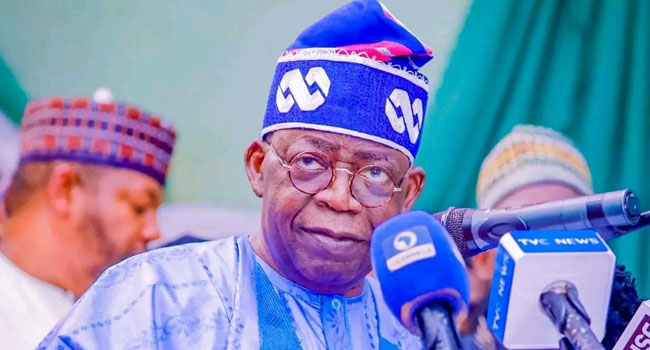
This was disclosed Thursday by the Chairman of the Nigerian Communications Commission (NCC), Idris Ibikunle Olorunnimbe, at NCC, Lagos office.

He stated this during a courtesy visit by the telecom operators under the aegis of the Association of Licensed Telecoms Operators of Nigeria (ALTON) to the newly appointed chairman of NCC.
Olorunnimbe, who commended the operators for their investments and resilience in making services available to Nigerians, noted that the issue of optic fibre cuts, particularly by construction companies will be addressed decisively.
According to him, “In this age and time, it is unthinkable for the internet not to work. The role telecom services play in Nigeria cannot be overemphasised. When there is power or electricity cut, it can be managed with backups like solar and generators. When there is tap water cut, we can dig boreholes, but with telecoms, it is not easy to find an alternative to it as the industry provides services for almost all sectors.
“Mr. President is very much concerned about Critical National Infrastructure (CNI) in every sector. We are critical in commerce, we are critical in health, light and many other areas.
“Regarding the issue of CNI, we can’t do it alone. We must do it together and with all the other agencies of the government. It is very important that this industry that has been impacting socio-economic lives for over two decades has become the flagship of our country.”
Last year, NCC disclosed that the industry recorded over 1,100 fibre cuts, 545 cases of access denial, and nearly 100 thefts.
Nigeria’s largest telecom operator disclosed that its network suffered over 9,000 fibre cuts in 2025, highlighting persistent weaknesses in the country’s telecom infrastructure. Theft and vandalism affected 211 sites by the end of November, further straining service reliability.
Speaking further on the development, NCC chairman stated that fibre cable cutting must be stopped.
“And we will take this message to our state governments and ministers. If contractors know that if they damage any national infrastructure such as fibre cable, that their work is going to be stopped and they are going to be the ones to fix it, they will be more careful. If I know that if I damage someone’s property and there would not be consequences, I will keep on damaging. So, the message we are going to carry is very simple to our sub-nationals.
“I will communicate the message to Mr. President that, if any telecom critical infrastructure is damaged, whether by a government or private contractor, they will be made to fix it, and without fixing it, their work will be stopped.”
On his part, the chairman of the Association of Licensed Telecom Operators of Nigeria said the telecom industry is on a recovery trend, citing the debt owed by banks to them and the tariff review and implementation which commenced last year as the catalysts.
“One of the most difficult challenges we had was the Unstructured Supplementary Service Data (USSD) debt crisis — a debt burden that grew over four years to nearly N300 billion. It had become a systemic risk to our sector and the digital financial ecosystem. Today, there is no outstanding USSD debt.”
He also highlighted energy as one of service providers’ largest operating costs.
“While fuel prices have risen, supply availability and distribution stability have improved significantly compared to previous years.
“On security, vandalism and fibre damage historically posed severe threats to network reliability.”
Adebayo commended the current administration for designating telecommunications infrastructure as Critical National Information Infrastructure (CNII) through Executive Order.
“Although, this recognition is transformative, more work is required for full operationalisation. It signals strong federal commitment to infrastructure protection.
“Currently, a high-level delegation from the Office of the National Security Adviser is in Lagos engaging our command centres and infrastructure protection architecture. These engagements are encouraging and promising,” ALTON chairman said.
The Executive Vice-Chairman of NCC, Dr. Aminu Maida, said the issue of fibre cuts should not be played down, but taken seriously, as vandalism statistics represent service disruptions for millions of Nigerians and losses running into billions of naira, noting that fibre optic vandalism could slow Nigeria’s digital transformation plans.
NCC in collaboration with relevant security agencies has been leading a crusade to prevent damages to fibre optic infrastructure, particularly focusing on construction companies, contractors, and other actors whose projects repeatedly cut cables.
Already, NCC has partnered Nigeria Security and Civil Defence Corps (NSCDC) to address the challenge by preventing further damages caused during excavation, roadworks, or civil engineering projects carried out without prior coordination with network operators and relevant regulators.