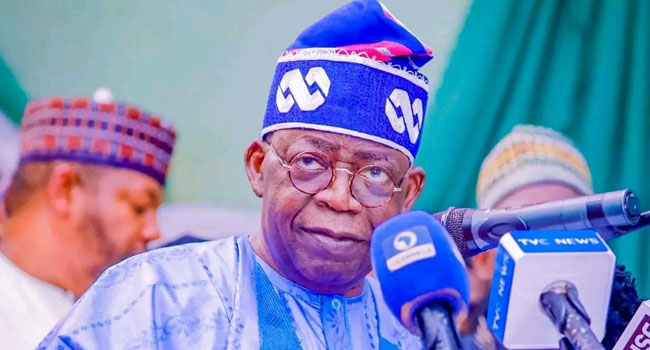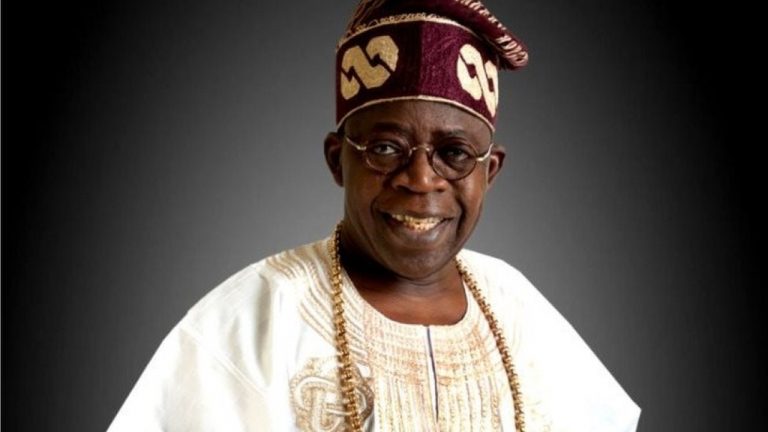
The minister of Solid Minerals Development, Dele Alake, has attributed the rapid growth of Nigeria’s solid minerals sector to the reforms introduced by President Bola Tinubu.
According to a statement by the minister’s special assistant on media, Segun Tomori, on Sunday, Alake said the reforms had resulted in increased contribution of the sector to the Gross Domestic Product (GDP), greater inflow of foreign direct investment and Nigeria’s rising profile as a preferred destination for mining activities.
The minister spoke through the director-general of the Mining Cadastre Office, Engineer Obadiah Nkom, at the just concluded Prospectors and Developers Association of Canada (PDAC) conference in Toronto, Canada.
He emphasised Nigeria’s readiness to partner with credible investors committed to responsible and sustainable mining in the country.
Addressing participants at the 27th Annual African Mining Breakfast — a high-level platform that brings together African ministers, industry leaders and global investors for sustained dialogue on unlocking the continent’s mineral wealth — Alake stressed the need for greater synergy among African countries to unlock the vast potential within the sector.
The ministry’s delegation also participated in the International Mines Ministers Summit, which had representatives from France, Chile, Saudi Arabia, the Democratic Republic of Congo (DRC), Cameroon, Sierra Leone, Canada, Egypt, Australia, the Intergovernmental Forum (IGF) and the World Economic Forum (WEF), among others.
Alake reiterated the Federal Government’s commitment to promoting value addition within the solid minerals sector, noting that Nigeria had moved beyond merely exporting raw minerals to emphasising local processing to ensure maximum beneficiation for citizens and the nation’s economy.
He also underscored the importance of stronger cross-border integration within the mining industry, stating that establishing structured agreements and coordinated policies would help unlock greater opportunities for trade, investment and shared infrastructure development across borders.
“Integration does not fail because Africa lacks frameworks. It fails because projects stall between borders. A mine may be viable in one country, but the rail link, the power line, or the processing facility sits across the border, and no institution takes responsibility for stitching these pieces together.
“I want to charge development finance institutions and strategic investors to go beyond funding local investments in isolation and begin funding regional linking systems,” the minister added.
Alake further assured that Nigeria was ready to anchor such regional corridors.
“Nigeria is ready to anchor such corridors. We have the data, the reforms and the political backing, and all we need right now is capital structured for integration,” he said.
On the sidelines of the PDAC conference, the Nigerian delegation also met with the Chairperson of the Canada–Africa Chamber of Business, Paula Caldwell, to explore opportunities for strengthening Canada–Nigeria business engagement in the mining sector.
The meeting, facilitated by the Canadian High Commissioner to Nigeria, Pasquale Salvaggio, underscored the importance of expanding commercial and investment partnerships between Canadian companies and Nigeria’s solid minerals sector.
Discussions focused on an upcoming Canada–Africa business engagement initiative, particularly the proposed African Partnership Business Conference scheduled to take place in May.
Caldwell explained that the conference would serve as a high-level platform to connect Canadian companies with African investment opportunities and government stakeholders.
“The conference aims to bring together Canadian companies seeking to expand their presence in Africa, including firms already operating on the continent but looking to enter or grow within the Nigerian market,” she said.
The four-day conference also featured high-level engagements with international mining executives, development partners and prospective investors to highlight Nigeria’s vast mineral potential and ongoing reforms aimed at improving transparency, strengthening geological data, formalising artisanal mining activities and creating a more competitive investment climate.
The Nigerian delegation used the engagements to showcase the country’s mineral potential and the federal government’s ongoing reforms designed to attract responsible investment into the sector.