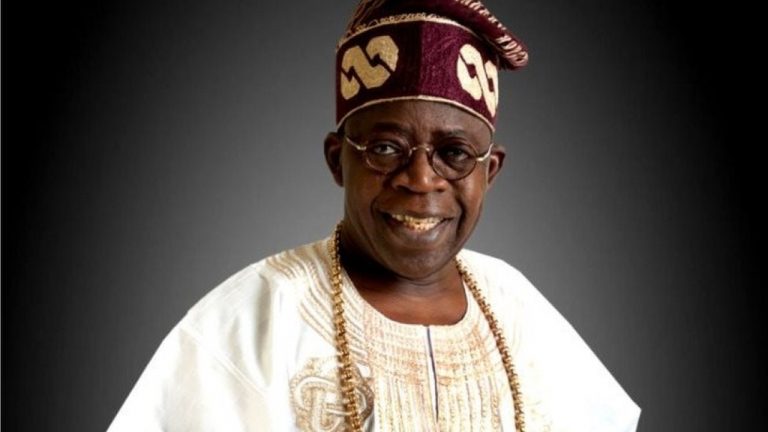
Nigerian stocks have achieved their most remarkable performance under any civilian government since 1999, as the market experiences a significant rally under President Bola Ahmed Tinubu.
AAM2025: Tinubu advocates for the adoption of the PAPSS payment system across Africa to enhance financial integration.
According to an analysis by Nairametrics, the All-Share Index (ASI) has surged by 136% since President Tinubu took office in May 2023.
The ASI, which was at 55,769.28 points on May 29, 2023, is currently trading at approximately 131,000 points—a historic achievement for the Nigerian capital market.
Weekly Stock Update: The Nigerian Exchange Group reports week-on-week growth, increasing by 0.48%.
This represents the highest gain ever recorded at this point in any presidency since Nigeria transitioned back to democratic governance.
For context:
At the same point during the Buhari administration (2016), the market had increased by 4.47%.
Under Goodluck Jonathan, it had risen by 47% as of June 2013.
During the Yar’Adua administration, the market experienced a decline of 49%, coinciding with Nigeria’s most severe stock market crash.
The closest comparison is the Obasanjo administration, which achieved 115% gains by July 2001.
In terms of market capitalization, the Nigerian Exchange (NGX) has grown from approximately N30 trillion in May 2023 to over N75 trillion today—an astonishing N45 trillion increase in value.
Although this gain may appear more modest when adjusted for exchange rate depreciation, the market’s performance is significant given the broader macroeconomic challenges confronting the nation.
What is fueling the rally?
President Tinubu’s economic reform agenda has been instrumental in the stock market’s performance.
From the removal of fuel subsidies to the unification of foreign exchange, the administration has implemented bold policies aimed at stabilizing public finances and restoring investor confidence.
While these policies have led to inflation and have put pressure on household incomes, they have also garnered praise from global institutions and the investment community, who view them as market-friendly and essential for sustainable long-term growth.
The bullish performance of the stock market has been supported by:
The Central Bank of Nigeria’s (CBN) initiative to recapitalize banks, which has enhanced the valuation of publicly listed banks and attracted new capital into the market. It is anticipated that over N5 trillion will be raised by the year 2026.
An increase in liquidity, as FAAC allocations have risen significantly following the elimination of subsidies.
A reduction in speculative activities within the forex market, compelling numerous investors to shift their funds into higher-yielding financial assets.
An abundance of liquidity in the financial system, partly driven by the unprecedented growth of the money supply and the lingering effects of the Buhari administration’s Ways and Means financing.
Elevated interest rates, with the current Monetary Policy Rate (MPR) at 27.5%, encouraging investments in both equities and fixed income assets.
A rise in corporate profitability, as many publicly listed companies have reported revenue growth despite facing inflationary pressures and a decline in consumer purchasing power.
Local investors taking the lead
Nairametrics has noted that local institutional and retail investors have been the primary drivers of the recent market rally, while foreign portfolio investors remain cautious, even with increased inflows in the first quarter of 2025.
In the first quarter of 2025, domestic transactions reached N1.418 trillion, which accounted for 63.63% of the total market transactions amounting to N2.23 trillion.
Looking back over the first two years of President Tinubu’s administration (from May 2023 to May 2025), data from the NGX Domestic and Foreign Portfolio Report indicates that domestic participation in equity trading totaled N9.375 trillion, representing approximately 81% of the total transaction value of N11.535 trillion.
In contrast, foreign participation was recorded at N2.159 trillion during the same timeframe.
This trend illustrates a growing confidence among domestic investors in the market, amidst a scarcity of alternative investment opportunities.
Sectors such as banking, agriculture, industrials, and oil & gas have emerged as significant beneficiaries, with several blue-chip stocks reaching all-time highs.
For instance, the banking sector has contributed over N7 trillion in market capitalization.
Between 2023 and 2025—primarily fueled by significant increases from GTCO (N2 trillion) and Zenith Bank (N1.7 trillion).
In the ICT sector, MTN Nigeria has contributed over N3 trillion in market value, while Airtel Africa closely follows with an increase of approximately N1.8 trillion.
Recent and expected listings are also bolstering market sentiment. Aradel Holdings, which went public last year, has added more than N2 trillion to the market. Other potential listings, such as Dangote Fertilizer and a proposed NNPC IPO, could further enhance momentum.
What lies ahead
With Nigerian equities already rising by 27.84% year-to-date as of mid-July 2025, analysts predict that the market may conclude the month with double-digit gains. Should this rally persist throughout the remainder of the year, President Tinubu could be remembered as the most impactful Nigerian president regarding stock market performance.
Nevertheless, for the majority of Nigerians, the remarkable returns of the stock market seem detached from their everyday experiences.
The ultimate assessment of the administration may not derive from the NGX, but rather from the extent to which Nigerians improve in terms of living costs, employment opportunities, and access to essential services.
Nonetheless, for investors and market observers, the data is clear. Nigerian stocks are experiencing a historic bull market—and this is occurring under the Tinubu administration.